This post may contain affiliate links which means I may earn a commission if you make a purchase through my links (at no extra cost to you). Please read my full dislcaimer for more info.
As a child, the only things I knew how to cook were eggs, hot dogs, and pizza.
Why?
Because I wasn’t taught the basics of cooking and I didn’t have a teacher who was patient enough to teach me how to cook.
As a result, I felt like I wasn’t capable of cooking on my own so when I became an adult, I relied on other people to cook for me (e.g. family member, significant other, restaurants).
Even though I had food to eat, I still had a desire to learn how to cook but I wasn’t sure where to start.
Yes, there are hundreds of videos on YouTube, Instagram, TikTok, and Facebook that teach people how to cook meals.
Yes, there are hundreds of blog posts and cookbooks that teach people how to cook meals.
But I still didn’t know where to start or if I would be successful with my attempts to cook.
When I got my own place, I would mainly cook breakfast. That would either be waffles, fried eggs, and hot dogs or baked chicken patties.
My mom would cook meals for me that I could eat for lunch or dinner so I didn’t have to worry about those meals.
This setup worked for me until I decided that I need to be more independent so I could survive even if certain options were taken away from me.
What if my mom couldn’t cook for me because she was sick or decided she doesn’t want to cook for me anymore (which is valid since I’m no longer a child)?
What if I don’t have the budget to buy meals from restaurants everyday?
What if I can’t afford to buy chicken patties or pizza from the grocery store every week or month? What if I get tired of eating that?
Most importantly, I was concerned about my health. I got a blood test done that showed I had a deficiency for certain vitamins and minerals. Thus, I needed to eat more balanced meals (and take supplements prescribed by my medical provider) to improve my vitamin and mineral levels.
I started with a small change: adding vegetables to my meals.
When I would bake my chicken patties, I would also roast broccoli or Brussels sprouts to eat as a side and as a source of fiber.
This worked until it didn’t—the chicken patties became financially inconvenient. With the money I would spend on chicken patties, I could use it to buy a few trays of raw meat that I could cook and have as part of meals for several days (which meant I would have more variety for meals too).
I wanted to have beef as part of my diet again since it’s a good source of protein and iron. I thought about getting the beef patties but those were more expensive than getting a few trays of ground beef or chopped beef.
My financial situation was the push I needed to start experimenting with cooking raw meat. Because I was used to baking food, I decided to bake whatever meat I bought (e.g. beef, chicken, fish) instead of cook it on the stove.
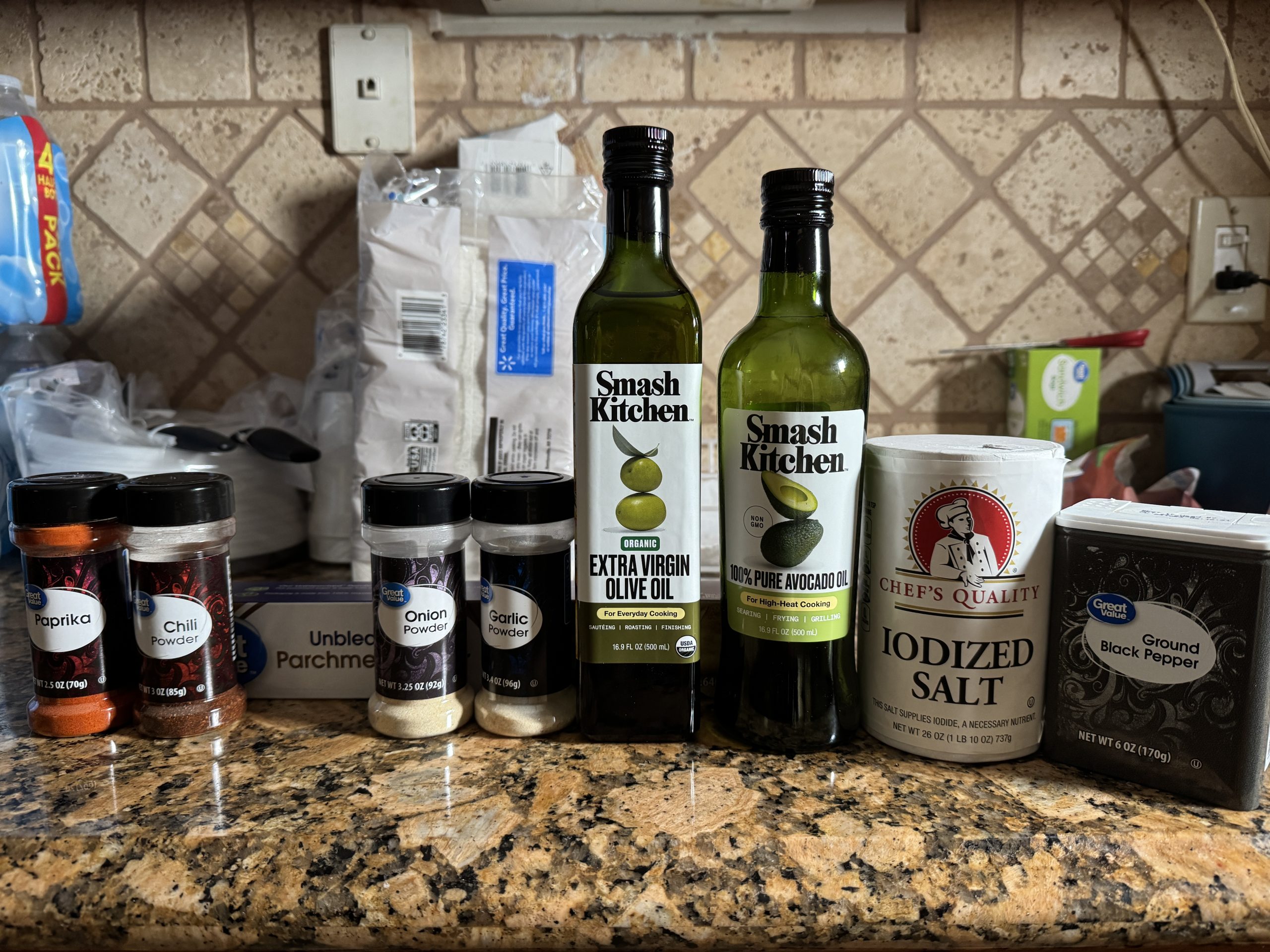
I also decided to switch the type of cooking oil I used. After doing some research, I bought a bottle of extra virgin olive oil (and later on, I accidentally bought a bottle of avocado oil from the same brand and ended up liking that too so now I alternate between those two cooking oils).
Additionally, I got parchment paper and some more seasonings: garlic powder, onion powder, paprika, and chili powder.
When I cook, I bake the meats and veggies on baking sheets lined with parchment paper at 400 degrees Fahrenheit.
For beef, I season it with oil, salt, black pepper, and garlic powder. With my oven, I found that 30 minutes is the perfect time limit to bake beef (e.g. ground beef & beef cuts).
For chicken, I season it with oil, salt, black pepper, garlic powder, paprika, onion powder, and chili powder. I bake chicken longer than beef and with my oven, 40-50 minutes is a good time limit.
For salmon, I season it the same way I season beef, and for shrimp, I season it the same way I season chicken.
But wait—I’m getting ahead of myself. How did I know what seasonings to use and how long to bake things?
The honest answer that will turn some people off: ChatGPT and trial & error.
Yes, I used AI as a starting point to see how people usually season meats and how long they baked different meats.
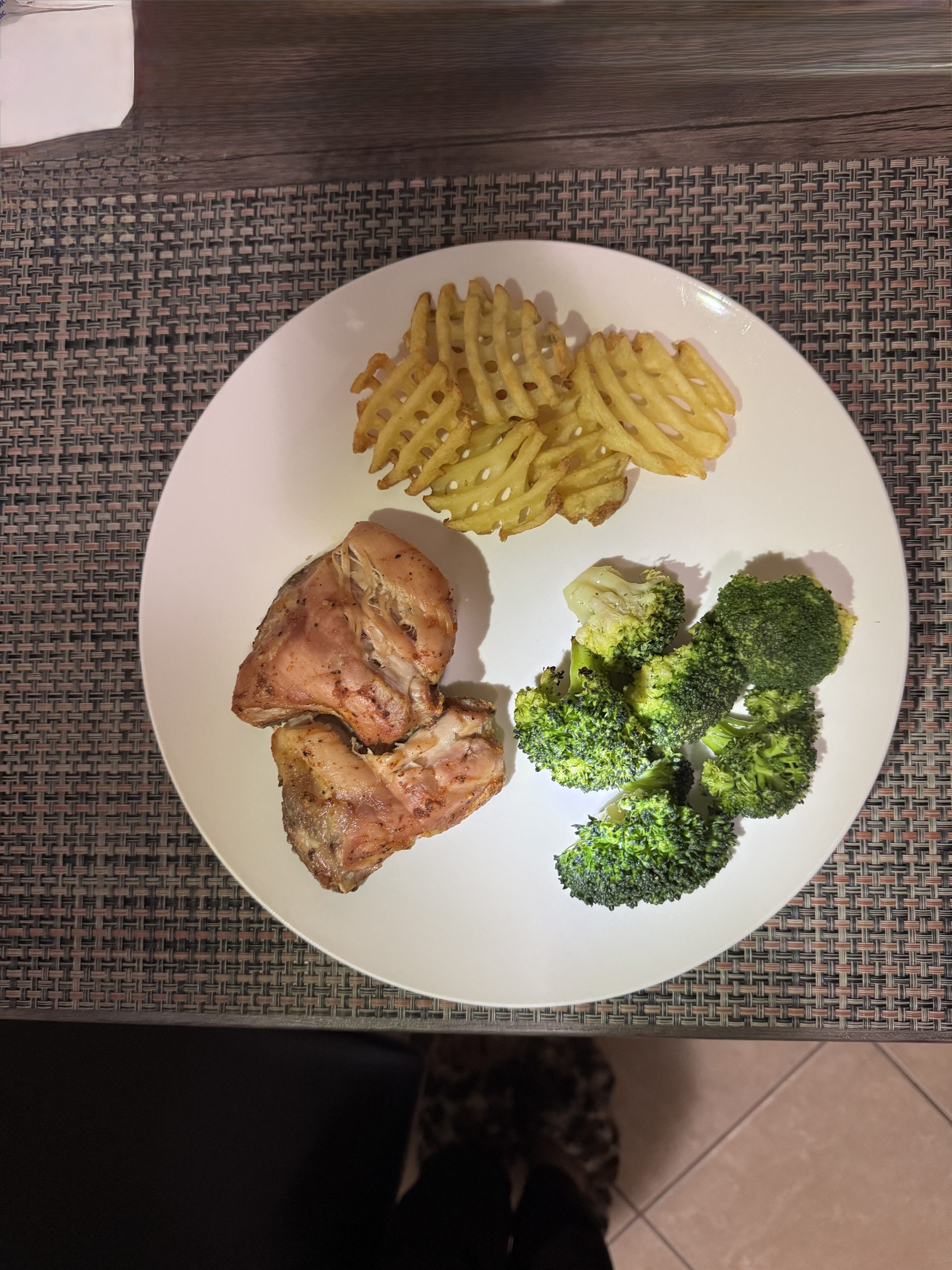
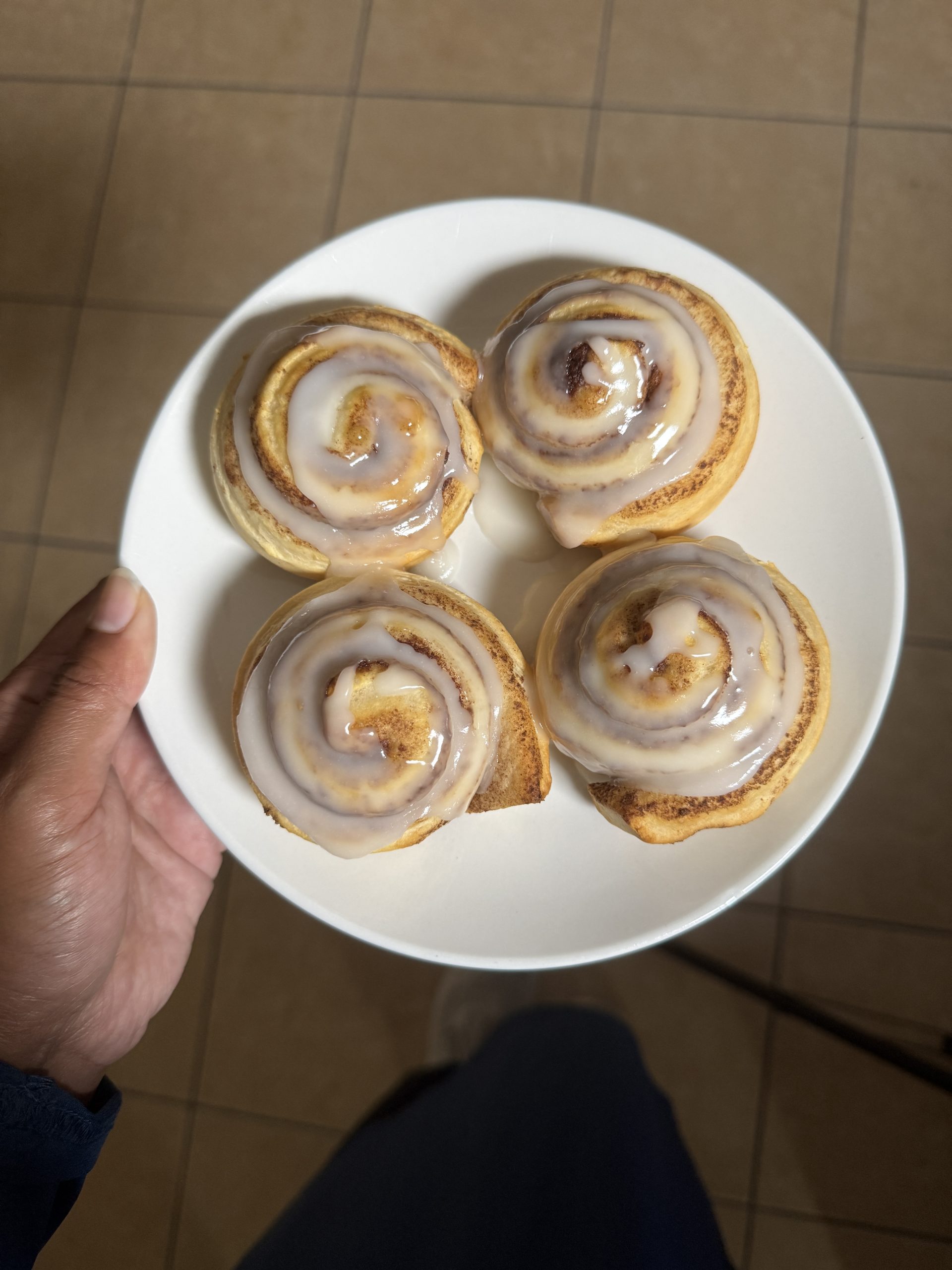
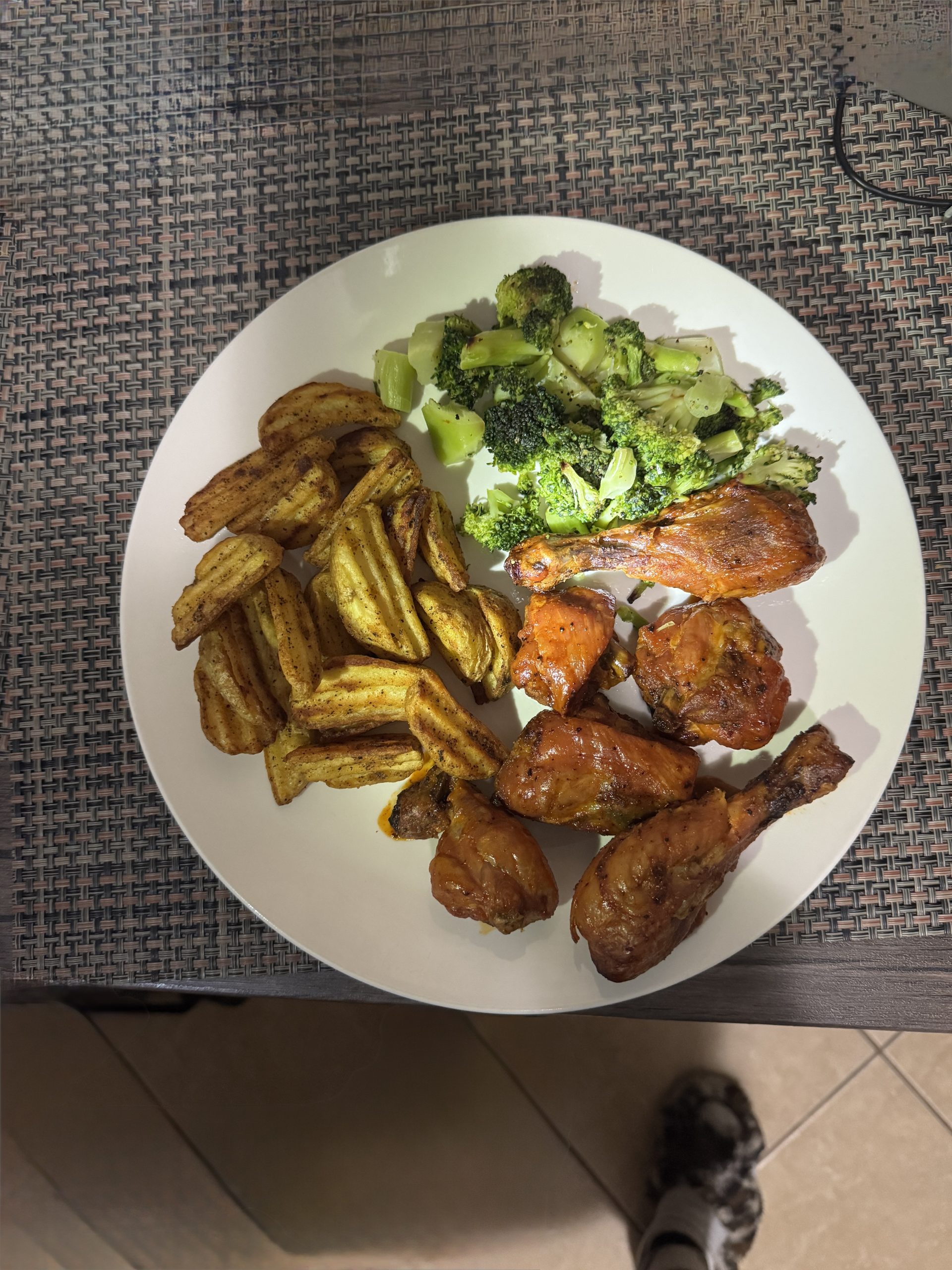
That information gave me the base I needed to start experimenting with cooking, but actually seasoning everything (I don’t measure when I season so I didn’t follow those instructions) and baking them at the suggested times taught me how long to actually bake things for in my oven without undercooking or overcooking them.
When I was starting out, I did “over season” some things and I did overcook some things (the food was still edible so I ate it regardless 😆). Through trial and error, though, I learned how much seasonings to use and how long to bake different types of meats.
Another thing that might turn some people off: I wear disposable gloves when I handle raw meat. Some people might think that’s unnecessary or wasteful but wearing gloves is currently the only way I can handle raw meat without feeling nauseated. I do wash my hands before and after handling raw meat but I choose to wear gloves when I’m taking the meat out of the package, rinsing it, and mixing it together after I season it so I won’t feel the texture of the meat.
I’ve got two more tips that some people might turn their nose up at: I used frozen veggies and frozen potato variations to make sides for my meals.
I was working a lot so I didn’t want to make frequent trips to the grocery stores. Thus, I would buy raw meat and frozen veggies in bulk and store them in the freezer until I was ready to cook them.
I would mostly buy chicken (leg quarters and wings) because it’s cheaper than beef but I would buy beef too (beef cuts and ground beef). For veggies, I love broccoli and Brussels sprouts so I would buy those. I also bought some frozen green beans, edamame, and spinach (unfortunately, I didn’t get to cook all of it—I’ll get to why later).

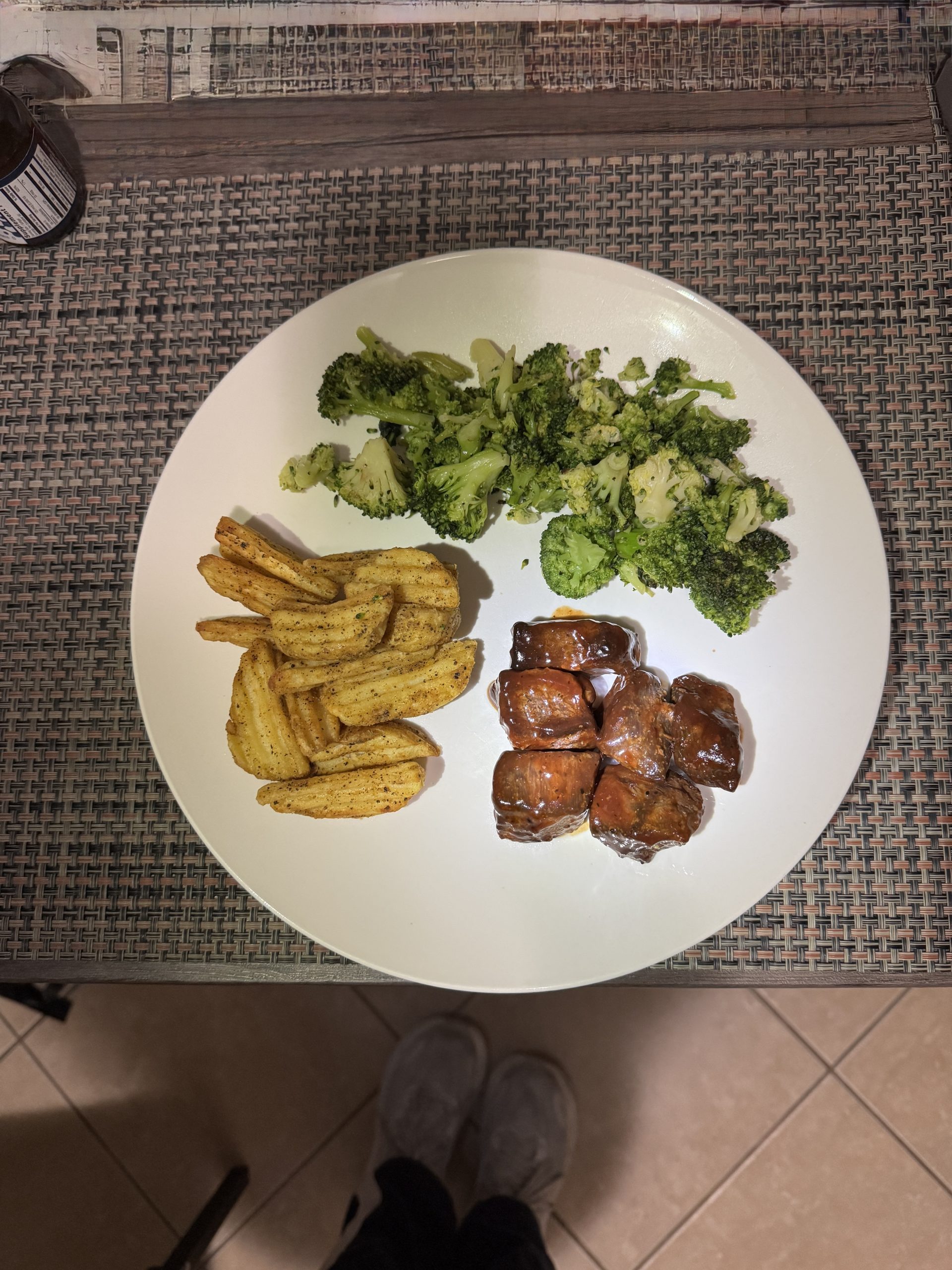

Tips for roasting frozen broccoli that worked for me:
- Bake them on the top rack of the oven
- Put them on a baking sheet with parchment paper without oil or seasonings for 10 minutes
- Take them out, drain the water from the pan, add oil, salt, and pepper to the pan (mix them up), and put the pan back in the oven for another 10 minutes
- Bake for longer if needed; with this method, the broccoli won’t be soggy!
For the potato variations, I would buy frozen fries (Great Value or Kinder’s brand), Garlic Parmesan potatoes (Kinder’s brand), and instant mashed potatoes (Idahoan brand).
I also bought (and still buy) canned items such as beans, corn, and fruits as well as BBQ sauce and hot sauce for the meats.
By buying those specific items, I was able to have balanced meals (protein, fiber, carbs) and cook regularly without having to go to the grocery stores multiple times a week.
This system allowed me to experiment with cooking different foods and switching up meals. I loved being able to cook for myself and have some of my favorite foods again (e.g. hot wings, fries, and broccoli).

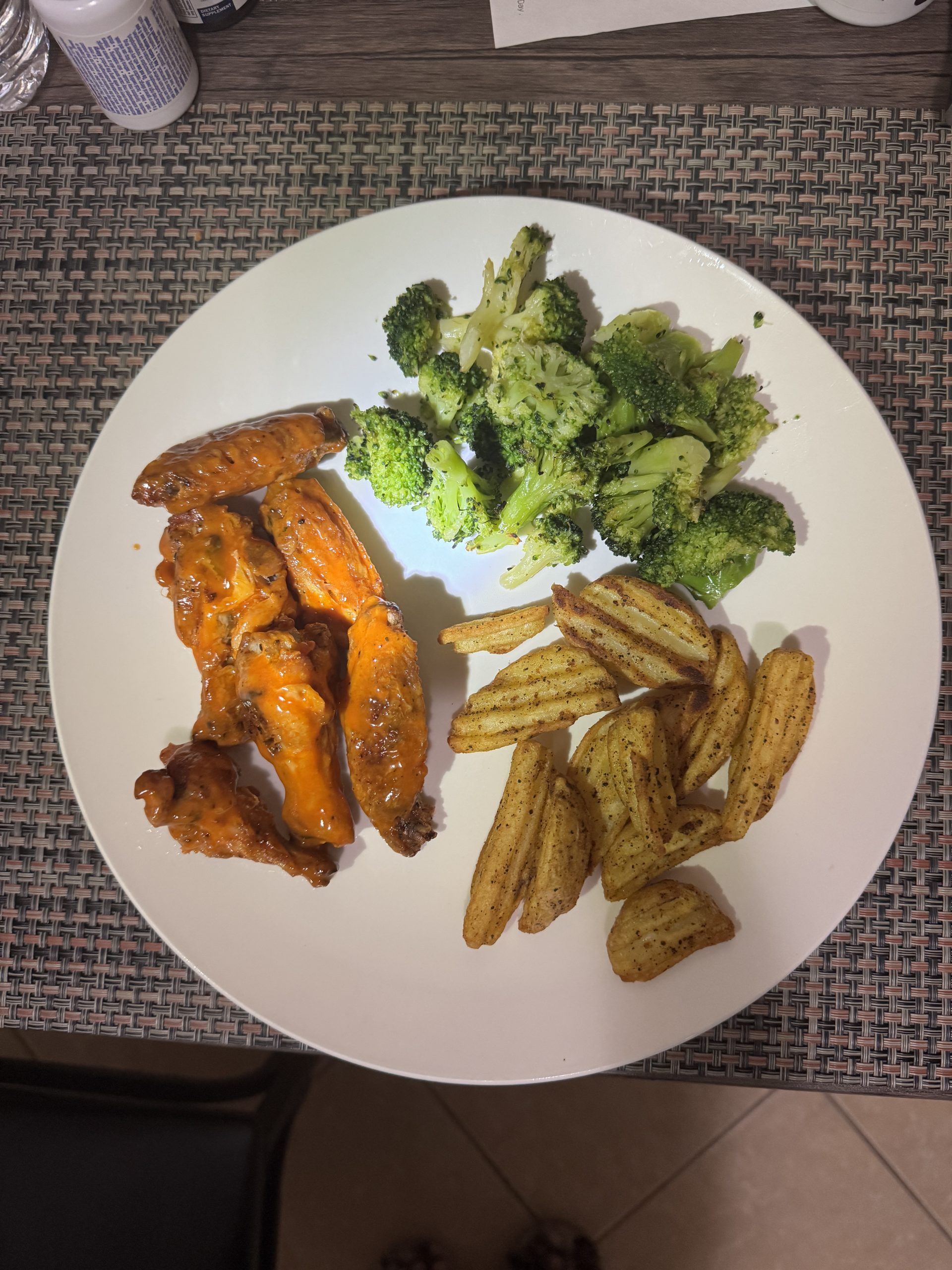
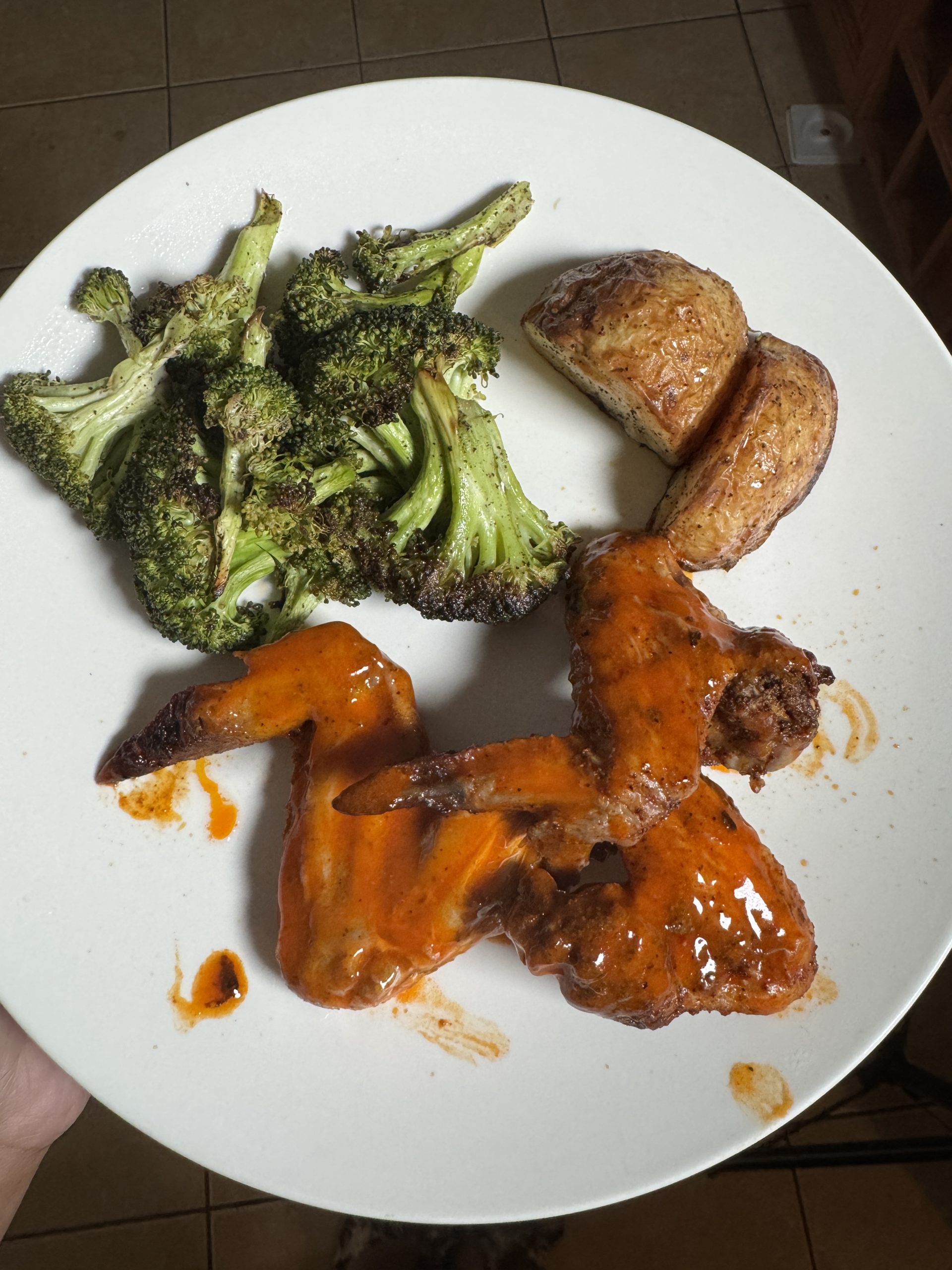
Cooking felt delightful . . . until my refrigerator stopped working properly.
It was time for me to go grocery shopping again to buy some meats and veggies in bulk, so I went to a halal grocery store and Walmart to stock up on items.
When I got home and opened my freezer, I saw that the water bottles that were frozen the night before had defrosted and looked like they had been lying in a fridge. The bags of frozen veggies were soggy and leaking so I had to dispose of them.
I felt crushed. What was I going to do? I just bought items that needed to be stored in a freezer but my freezer wasn’t working. I checked the fridge and while it was cool, it wasn’t as cold as it was supposed to be.
After giving it some thought, I went to Walmart and bought a mini fridge, a mini cooler, and a bag of ice.
I unboxed and plugged in the fridge, and I filled up the cooler with ice and put some items in there. Next, I prepped the meats so I could cook all of it that day. I also cooked some of the sides. By the time I was done, the mini fridge was cold enough to use so I stored the cooked food in there.
Because I no longer had access to a functional full-sized refrigerator, I couldn’t buy items in bulk or frozen items like before.
This obstacle forced me to start going to the grocery stores more often than I’d like to and start buying and using fresh vegetables instead of frozen vegetables. I’ve had to adjust the bake times for those since they have a shorter baking time than frozen vegetables (and I’ve been baking them on the lower rack instead of the top rack).
On the bright side, I now chop and bake potatoes and have them frequently as my source of carbs which means I’m continuing to learn how to cook different foods.
I’ve also started buying eggs again but instead of frying them, I boil them and add them to my meals to have another source of protein.
As you can tell, when I cook, I bake most of my food. Doing so allows me to do other things while the food is cooking. For example, once I season the meat, put it on the baking sheets, and put those in the oven, I use that timeframe to prep the veggies I want to cook and boil some eggs on the stove.
Additionally, while the meat or veggies are baking, I can put a load of laundry in the washer and start the machine, I can work on a blog post or check my emails, or I can do whatever else I want while the food is cooking without having to stand near the oven to check on it frequently (I set a timer for the corresponding bake time and only go check once that timer goes off).
I do cook certain things on the stove such as eggs, beans, and pasta but for the most part, if I can cook it in the oven, I’m going to choose to bake it or roast it instead of fry it.
That’s my preference, though. Maybe when you start cooking, you’ll find that you love to cook on the stove or use certain appliances instead of baking things in a conventional oven.
The point of all of this is to say that you can learn how to cook at any age and you don’t have to feel shame around learning how to cook when you’re an adult.
The best way to learn is through trial and error but before you get there, you can read blog posts or cookbooks or watch cooking videos on social media to see how other people prep, season, and cook their meals.
You can also use AI for help with getting started. 😜
Whatever you choose, give yourself permission to be a beginner. You don’t have to know everything about cooking to get started. It’s okay to make mistakes (even professionals make mistakes). It’s okay to ask questions and pause to research those answers.
Most importantly, when life throws you curveballs (like it did with me with the fridge situation), don’t allow those obstacles to get in the way of you learning a new skill.
Instead, use it as an opportunity to learn different methods to improve that skill. After all, there’s more than one way to cook a meal so choose the method that works best for you.