This post may contain affiliate links which means I may earn a commission if you make a purchase through my links (at no extra cost to you). Please read my full dislcaimer for more info.
Moving can be expensive, and it’s one of those life transitions where some expenses are unavoidable (whether it’s because of a job, new addition to your family, change of marital status, or other personal reasons).
While there will always be costs associated with moving, there are ways you can save on those moving costs. Here are 20 ideas to consider using to plan for your next move and save money.
Money Saving Idea 1: Declutter your home before you start packing.
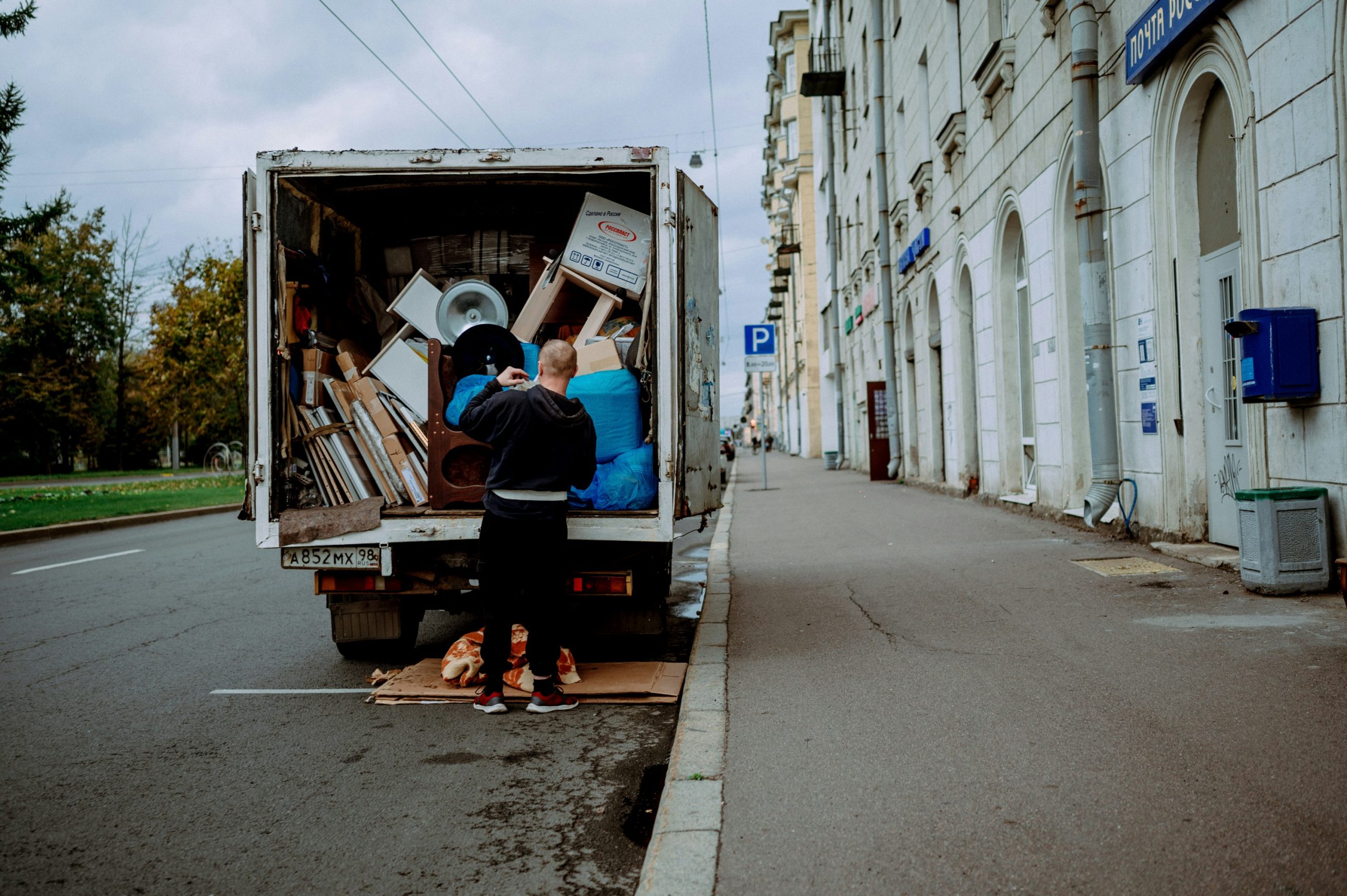
If you decide to pack everything you currently have and move everything you currently have, you can end up with a higher bill for labor, packing materials, and truck space that may not be necessary.
How so?
There are items in your home that you no longer want because they’re broken, outdated, from someone you no longer associate with, or no longer fit your current style, goals, or preferences.
If you don’t go through your belongings beforehand, all of those items will end up being packed and transported to your new home.
The more items you have, the more packing materials you will need to pack and protect those items.
The more items you have, the more items movers will have to transport which means the longer the job will take.
The more items you have, the more truck space or trailer space your items will take up which means the more you will be charged for moving trucks or containers.
The more packing materials that are used, the more space your items take up, and the longer the movers are working, the higher your bill will be.
You can help reduce the cost of packing materials, labor, and truck or trailer space by decluttering your home before your move-out date.
Give yourself one month at a minimum to go through all of your belongings to decide what you want to keep and what you want to part ways with.
Money Saving Idea 2: Sell items that you don’t want (and are in good condition).
As you’re decluttering your home, you will naturally come across items that you no longer want.
For the items that are still in good condition, you can sell them to make money that you can use to cover some of your moving costs.
You can sell your items online via popular platforms such as Facebook Marketplace and eBay.
You can host a garage sale or yard sale on certain dates to sell those items.
You can also look for stores that will pay you for specific items. For example, you can sell used clothes to Plato’s Closet and used books to Half Price Books.
If you have trouble selling certain items, let your family, friends, and neighbors know what items you’re trying to sell and ask them if they know anyone who may be interested in buying them.
With these different options, you can increase your chances of getting rid of items you no longer want and making some extra money you can use to help with your moving expenses.
Money Saving Idea 3: Consider the cost of breaking your lease before choosing a moving date.
Sometimes, your circumstances can force you to terminate your lease agreement early (e.g. new job offer, safety concerns, family changes, etc.).
However, if you’re not in a situation where you have to move immediately, then look at your lease agreement to see what fees will apply for early termination and determine if paying those fees will be worth it in the long run or if it will be better to wait until your lease is up to move out.
In some cases, it might be worth it because you will be able to save money in other areas (e.g. a rental home with lower rent and/or special move-in promotions for new renters; lower moving costs due to the off-season). In other cases, it might not be worth it because the early-termination fees might be high as well as other costs associated with moving out.
Money Saving Idea 4: Choose a move-out date that’s during the off-season.
For the U.S., peak moving season is usually May through September, because that’s when children are out of school and the weather is warmer which makes it easier to move.
Because many people choose to move during those months, a lot of moving companies will have less scheduling flexibility due to increased demand and may charge more during those times.
If you can delay moving, then choosing a move-out date that’s during the off-season will give you more scheduling flexibility and it can help you get a lower rate since demand will be lower.
If you have to move out by a certain month, then you can choose a day of the week and time of the month that is not as popular.
For example, weekends are popular because that’s when children don’t have to go to school and many people are normally off from work on those days. Therefore, instead of picking Saturday or Sunday, you can choose a date that falls on a Tuesday or Wednesday instead.
Additionally, many people will move either at the beginning of a month or at the end of a month due to the terms of a rental agreement. If you’re able to, you can choose a date that is in the middle of the month instead.
While there are tradeoffs with this option (e.g. dealing with cold temperatures and weather complications), it can be worth it if you’re not in a rush to move.
Money Saving Idea 5: Ask moving companies about current specials and promotions.
Similar to the previous idea, many moving companies will offer special pricing or first-time customer promotions during the off-season (and in general) to get new clients.
You can ask them what they have available and what terms apply.
For example, a moving company might offer to cover the cost of boxes but your move-out date has to be within the month of October.
Another moving company might offer 15% off to new customers but your move has to be local not long distance.
A storage container company might offer 15% off and free delivery but you have to sign a three-month contract with them.
If the terms of those promotions work with your moving arrangements, then take advantage of those deals to save some money on moving expenses. If not, try to negotiate with the company or use one of the other money-saving ideas in this post.
Money Saving Idea 6: Compare quotes from multiple moving companies.
In case you didn’t know, you don’t have to book the first moving company you come across.
You can look at different moving company websites and contact each of them for a quote. A lot of them will have a form you can fill out on their website or an email address listed that you can use to reach out to them. They will also have a phone number listed if you’re willing to talk on the phone instead.
When reaching out for a quote, don’t just say, “Hello. I want to move next month. How much will that cost?”
Because first of all, what city are you located in and what city are you trying to move to?
Thus, be as specific as possible. Meaning, tell them a date range of when you want to move, where you’re located and moving to, what size home you currently live in and will be moving to, and how much stuff you have (e.g. my attic, basement, and garage are full of items).
Depending on the company, they might ask you if you’re interested in packing services, unpacking services, and junk removal.
If you are interested, tell them which services you want so they can include those services in your quote. You can also ask for a quote that includes a breakdown of the price.
When reaching out, you can also ask them if they have any current promotions so they can apply those discounts to your quote.
Once you gather quotes from all those moving companies, compare the prices, services included, promotions included, and tradeoffs.
For example, Company A quoted you $1,000 to move your items from your current home to your new home. That price includes a 10% discount for first-time customers. Company A doesn’t offer junk removal or packing services.
Company B quoted you $1,500. That price includes junk removal services and your move will be scheduled during the off-season. Company B doesn’t offer packing services.
Company C quoted you $1,800. That price includes packing and unpacking services. Company C doesn’t offer junk removal services.
If price is the most important factor, then go with the company that quoted you the least. If there’s a certain service you want included such as junk removal, then determine if it will be better to have it bundled with the moving service or to book that service separately with another company.
Additionally, if there is a company you are leaning more towards but that company doesn’t offer a certain service or quoted you higher than another company that offers the services you want, then try to negotiate with that company. For example, you can let them know you reached out to other companies and received a quote of XYZ. Ask them if they can match that quote.
Money Saving Idea 7: Reuse old boxes you have.
If you have the original boxes for certain items (e.g. blender, TV, hair dryer), then use those boxes to pack the pertaining items in them.
If you have package boxes from Amazon, Walmart, UPS, etc., then use those boxes to pack your items in.
Make sure you check the quality of those boxes before reusing them. Check to see if they’re clean, dry, and sturdy. Make sure they don’t have significant tears, crushed corners, or weakened bottoms because those can cause the box to fall apart while someone is carrying it.
Additionally, you can remove or cover up old shipping labels and barcodes to maintain privacy and avoid confusion about what’s inside the boxes.
Money Saving Idea 8: Ask local businesses for free used boxes.
Many businesses receive their merchandise and inventory in cardboard boxes constantly, and some of those businesses might be willing to let people take those boxes that would typically be broken down and recycled.
Those businesses include grocery stores, bookstores, office supply stores, pharmacies, and other retail stores.
Pick a few of them to visit and ask an employee there if they’re allowed to give away some of those used boxes for free. You can also ask them when shipments typically arrive and if you can stop by on that day to collect some boxes for your move.
Similar to the previous idea, make sure those boxes are clean, dry, and sturdy. Depending on the type of business, you may want to be cautious of food residue, odors, and signs of pests before accepting those boxes.
Money Saving Idea 9: Rent storage bins instead of (only) buying boxes.
If you’re looking for another eco-friendly option, then consider renting storage bins from a tote rental company or moving company.
With this option, you won’t have to worry about breaking down and discarding 100+ cardboard boxes after you move. Instead, you can pack your items in those reusable containers and return the containers after you move into your new home.
Because storage containers are larger than many moving boxes, you can fit a lot more items in one which means you won’t have to rent as many storage containers as you would have to buy boxes. One of the downsides of this, though, is that the containers can be a lot heavier due to having more items in each which can lead to more physical strain for you and the movers. To combat this, use dollies to help transport the containers and have two people lift the containers at once to help reduce physical strain.
For items that are fragile and hold a lot of value to you, you can pack those items separately in cardboard boxes to help reduce the risk of them getting damaged during transit. If you still prefer to use storage containers, then make sure you use packing paper or bubble wrap to protect those items.
For items that are oddly shaped and won’t fit in a reusable container, you can use bubble wrap, shrink wrap, blankets, and/or large cardboard boxes to pack them and keep them secure.
Money Saving Idea 10: Pack clothes and other items in your suitcases.
If you already have suitcases, then you can use those to pack and transport items. In fact, a suitcase is the perfect type of container to use as your overnight bag so you can store your essentials in there that you will need on the days surrounding your move.
Depending on how many suitcases you have and the size of them, you can pack clothes, toiletries, towels, shoes, jewelry, important documents, electronics, and other valuables in there instead of cardboard boxes or reusable storage bins.
By doing this, you can keep your essentials nearby and reduce the number of containers you will need to pack your belongings in.
Money Saving Idea 11: Use household items to wrap fragile items and provide cushion in containers.
While I still recommend buying and using packing paper, bubble wrap, and shrink wrap in general, you can reduce the amount of packing materials needed by using items in your household to help protect fragile, delicate items.
For example, you can use clean towels, blankets, sweaters, rugs, scarves, hoodies, sheets, pillows, and other items that naturally provide cushioning to wrap fragile items (e.g. picture frames, small mirrors, glass containers, etc.), provide a layer between items, and fill empty spaces in containers so everything is packed in a compact way.
Money Saving Idea 12: Pack and unpack everything yourself and only hire movers.
While some moving companies do offer packing and unpacking services, you can save money by packing everything yourself, only hiring movers to transport everything, and unpacking everything yourself.
With that said, you will need to give yourself plenty of time to pack everything into containers. I usually recommend giving yourself one month at a minimum to sort through your belongings before your move, but if you are not in a rush to move, then I would say to give yourself three to six months at minimum to sort through and pack everything.
Between work, school, kids, and other responsibilities, you won’t have as much free time on a daily basis to pack, so give yourself enough time to pack up your entire home.
Money Saving Idea 13: Hire professional packers to help with the most time-consuming areas.
Hiring professional packers to pack everything and not hiring professional packers because you will pack everything are not the only two options.
The third option is to hire professional packers to pack items in the areas of your home that would be the most time-consuming because those areas have the most items or the most fragile items.
Examples of those areas are kitchen, basement, garage, attic, and closet. The kitchen typically has the most fragile items so it takes longer to pack because those delicate items need to be wrapped individually. The basement, garage, attic, or a closet can have a lot of items because those are areas people naturally store their belongings in and those areas can hold a lot of items.
Therefore, if you want help with packing, then hire packers to help with the areas that will take the longest and pack everything else yourself.
Additionally, you can book the professional packers for a maximum amount of time so you don’t go over your budget. For example, you can request four packers to help pack for three hours maximum, and within that timeframe, they can focus on packing items in one to two areas. That way, you can stick to paying a certain amount and get help with those time-consuming areas.
Money Saving Idea 14: Ask the packers to use your packing materials first.
When you hire professional packers, they will usually provide packing materials such as boxes, tape, packing paper, bubble wrap, etc.
If you already have cardboard boxes, reusable storage containers, packing paper, etc., then ask them to use your packing materials first before opening up a pack of wrapping paper or stack of cardboard boxes. That way, you can reduce the amount you’re charged for packing materials.
At previous packing appointments, my team and I have had clients ask us to use their boxes and paper first and we were happy to use those to help them save money.
Money Saving Idea 15: Move boxes and furniture that can fit in your personal vehicle.
If you plan to hire movers and want to save some money on moving expenses, then you can move some boxes and furniture yourself especially if your new home isn’t far from your current home. While you will have to make frequent trips, doing that can help reduce your moving bill.
Money Saving Idea 16: Hire people you know to help move furniture.
If a relative, friend, or neighbor has a pickup truck or van, then you can ask them if they would be willing to help you move some furniture to your new home. If they say yes, you can ask for help with large items such as bed frames, mattresses, desks, couches, washers, and dryers.
While this option can be cheaper than hiring professional movers, make sure they’re capable of moving heavy furniture and their vehicle has enough room for the items you want them to transport. Also, make sure to pay them a fair rate for helping you move your furniture.
Money Saving Idea 17: Do a service trade with family or friends.
If you would prefer to pay people with time (instead of money or pizza), then you can ask your family or friends to help you with packing or moving your items in exchange for your help with something else.
For example, if you’re a hairstylist, you can cut or style their hair in exchange for help with packing. If you’re a landscaper, you can mow their lawn in exchange for help with moving.
Make sure the trade is fair and beneficial to both of you. For example, if you’re a nail stylist who can offer a manicure in exchange for help with packing but one person isn’t interested in that, then you can offer to do a pedicure or help the person with something that will be useful to them (e.g. watch their pet for a weekend).
Money Saving Idea 18: Rent a moving truck and hire labor-only movers.
Depending on the rental company and the distance of your move, it could be less expensive to rent a moving truck, drive it yourself, and only hire movers for the physical labor you need (e.g. loading, unloading, or both). Those movers can be your family, friends, or neighbors as discussed previously or they can be professional labor-only movers. You can look for labor-only movers through popular platforms such as U-Haul Moving Help and Thumbtack.
Money Saving Idea 19: Disassemble furniture before the movers arrive.
Whether you hire a full-service moving company, professional labor-only movers, or people you know, disassembling furniture before they get to your home can help reduce the amount of time you will need their help with which can lower the cost of labor. Of course, only disassemble furniture if you know how to take it apart and put it back together (otherwise, skip this idea).
Money Saving Idea 20: Have everything ready before the packers or movers arrive.
Whether you hired professional packers, professional movers, or people you know, having your home ready to be packed and your items ready to be moved can help eliminate wasted time spent on trying to figure out everything once those individuals arrive.
What does being ready look like?
✅ Clearing entrances, hallways, and pathways to ensure no one will trip over anything on the floor and they can move through your home easily.
✅ Going through your belongings and decluttering the items you no longer want.
✅ Knowing what you want packed and moved and what you don’t want packed or moved.
And, following the other recommendations in this post about preparing for packers and movers.
If you’re paying these individuals by the hour, then being prepared for your appointment can help reduce the amount of time you’re charged for physical labor.
Need help getting ready for moving day?
There’s a lot to think about when preparing for a move, and saving money is only one part of the process. Staying organized and knowing what to pack, what to keep with you, and what to unpack first can help make moving easier.
That’s why I created Moving Day Essentials, a digital guide designed to help you prepare for your move and stay organized throughout the process.
Inside my guide, you’ll find checklists and worksheets to help you prepare before the packers and movers arrive, decide what needs to stay with you during the move, pack your overnight bag and open first box, and prepare for moving day.


Moving Day Essentials
Take some of the guesswork out of moving day. Moving Day Essentials is a 24-page digital printable guide with practical guidance, checklists, examples, and worksheets to help you prepare for your move, keep important items within reach, and decide what to unpack first in your new home.