
This post may contain affiliate links which means I may earn a commission if you make a purchase through my links (at no extra cost to you). Please read my full dislcaimer for more info.
You’ve decided to move out of your current home, secured a new place, and hired a moving team. However, this is either your first big move or it’s been a while since you’ve moved so you’re not sure how you need to prepare before your packers or movers arrive.
No worries!
As a professional packer who has experience working for a moving company, I can share my perspective of what I wish clients would do to help make packing day and moving day smoother for themselves and their team.
Here are 15 things I recommend doing before your packers or movers arrive at your apartment, townhome, or house.

1. Go through your belongings to decide what you want to keep, sell, donate, and throw away.
Whether you have lived in your home for one year or five years or ten years, you most likely have a mix of items: things you want to keep (and take with you to your new home or leave in a storage unit), things you want to sell, things you want to donate, and things you want to throw away (e.g. expired medicine, broken appliances).
While your packers and movers will help you pack your belongings into boxes and containers, they are not responsible for deciding which items you will keep and which items you will give away. That’s your job (as well as the other adults who live with you).
Give yourself a few days or a few weeks before your appointment to go through every room and space in your current home to look at everything and put them into categories.
Before your packers and movers arrive, you can move certain items and piles (e.g. sell and donate) to certain areas of your home (e.g. closet, garage) so that way they can be in one place and left untouched when the packers and movers start working.
2. Decide what is going to your new home versus a storage unit.
If you plan to have certain items moved to a storage unit because you’re downsizing or “in between homes” (e.g. haven’t closed on your new house yet), then it’s important for you to decide ahead of time what items will be moved to your new home and what items will be moved to a storage unit.
For example, you may decide to put your living room table, china cabinet, and gardening tools in a storage unit while your bedroom set, work desk, and sofa will be moved to your new home.
Regardless of what you decide, make sure you know where you want your belongings to go so when your packers and movers arrive, you can easily point out and explain to them what to do with everything.
3. Decide what you will take/move yourself.
For certain valuables (e.g. jewelry, cash, important documents), it will be better for you to transport them to your new home instead of having a moving company do that. That way, you will know exactly where those items are and you can eliminate stressful situations that can occur if something is misplaced or lost by someone else.
I’ve seen some clients decide to move TVs, computers, and musical instruments themselves instead of having the movers do that. This could be due to a past experience they want to avoid repeating or simply because they would rather transport those items themselves.
Additionally, some moving companies may have restrictions on what they will move. For example, some companies may explicitly state that they won’t move plants, alcohol, weapons, and hazardous materials.
Therefore, it’s important to read their policies and decide beforehand how certain belongings will be transported.
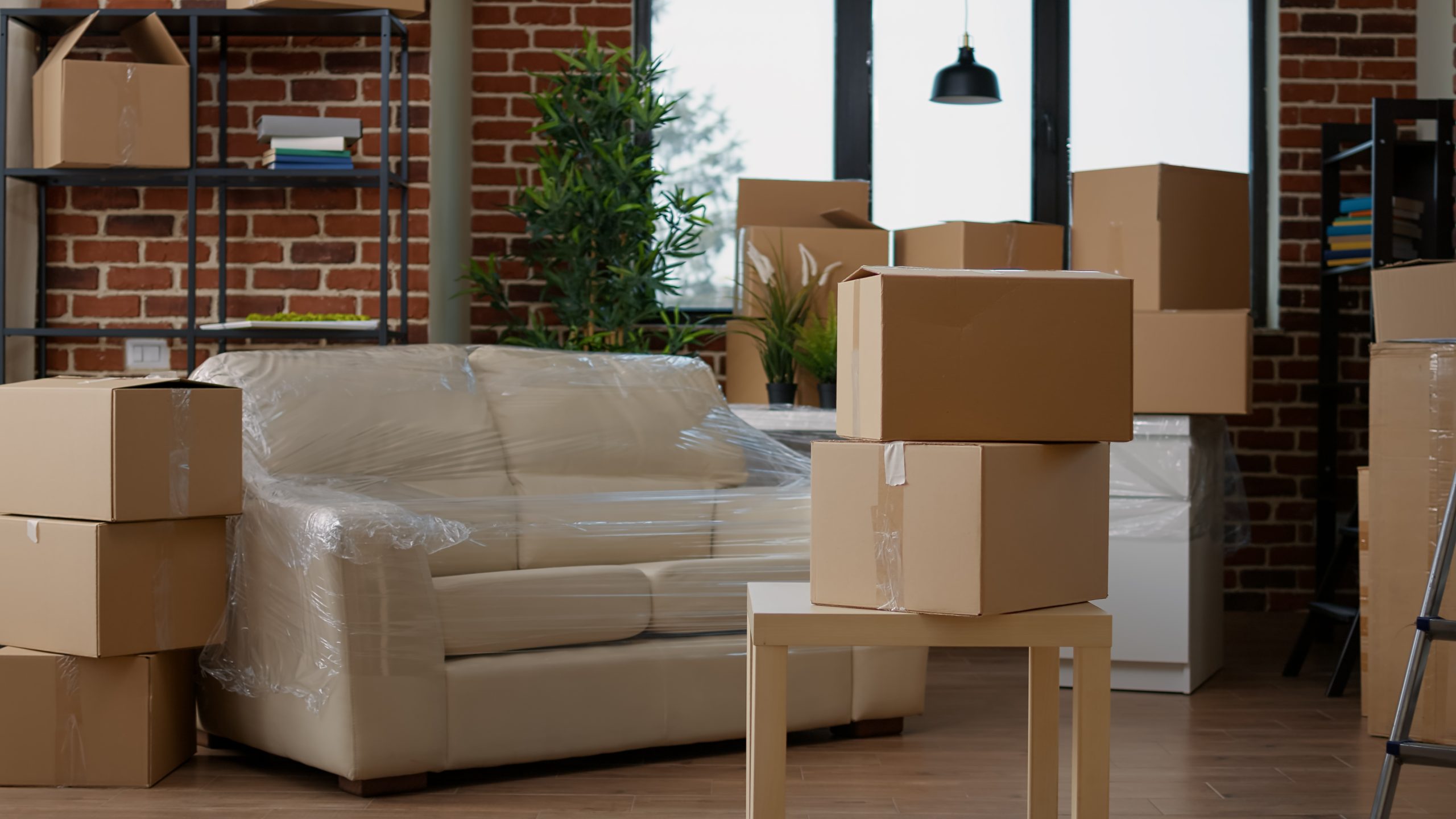
4. Decide how you want rooms and boxes labeled.
For some clients, it’s obvious what to label certain rooms (e.g. kitchen, office, bathroom).
For other clients, it’s not as obvious because they may have multiple rooms (e.g. two guest bedrooms, two offices) and they may have rooms that serve multiple purposes (e.g. a bedroom that serves as a guest room, office, and workout area).
While you don’t have to label the rooms beforehand, it’s good to know what you refer to them as so that when you’re doing a walkthrough with the packers and movers, you can tell them the names of each room so they can label the boxes accordingly and move the items in those rooms to the same types of rooms in your new home.
Additionally, it’s good to decide beforehand how detailed you want the boxes to be labeled.
For example, you may want them to only label which room the boxes need to go in (e.g. kitchen, living room, office). If you have multiple bedrooms, bathrooms, and closets, you may want them to be a little more detailed with the names of the rooms (e.g. her closet/his closet, her office/his office, Jane’s room/John’s room).
Furthermore, you may want the packers and movers to write down what exactly is in each box. While they don’t have to list every single item that’s in a box, you can ask them to specify what type of items are in a box (e.g. cooking utensils, shoes, books) or ask them to include the names of certain items.
For example, when I was packing an office for a client, they requested that I put “LG power cord” on the box so they could know that the power cord for their computer was in that specific box.
As another example, the moving company I work with had a client that requested us to label the book boxes according to how their bookshelves were labeled (they had the last names of authors in alphabetical order).
The boxes can be labeled as detailed or generic as you want but you need to decide beforehand on how you want them to be labeled.
5. Make sure your new home or temporary home is ready for moving day.
On the day before your move, make sure you have everything you need in order for the movers to get their job done.
If your apartment requires elevator reservations for a move, then put in that request ahead of time and confirm that it’s approved the day before your move.
If your neighborhood has parking restrictions, find out where the movers can park their trucks and other vehicles and let them know ahead of time.
Most importantly, make sure you have any keys and access codes that you need to get into your current home, new home, temporary home, and/or storage unit.
The movers can’t load and unload your belongings if they don’t have access to your homes or storage unit so get those details sorted out before your appointment.
6. Get the laundry done and the dishes done before the packers and movers arrive.
Look, I get it. You’re juggling a lot right now—work, school, kids, pets, household chores, errands, etc. On top of all of that, you’re preparing to move to a new neighborhood, city, or state.
It’s a lot so it’s easy to get behind on certain things such as laundry and dishes.
I’m not here to scold you about that.
If a load of laundry is being washed or dried or the dishwasher is running when the packers or movers show up, it’s not the end of the world. They get it and they’ll leave those areas for last.
However, I want to gently state that it would be better for you and your moving team if those things are done before they arrive to your home. That way, the laundry and dishes will be dried and ready to be packed by them, and those are two less things you’ll have to worry about that day.
7. Pack an overnight bag.
If you’re planning to stay in your current home, at a loved one’s home, or a hotel the night before your move, put together an overnight bag that includes essentials you will need that night and the day of your move.
Your bag can include a couple of outfits, toiletries, medications, chargers, important documents, and anything else you don’t want packed by the moving team and will need access to immediately for the next couple of days.
Please have this bag (or bags if you have multiple people in your household) packed the day before your packers or movers are scheduled to help you pack. That way, you don’t have to worry about someone accidentally packing something you will need.

8. Keep your pets secured.
If you’re one of those pet owners who believes everyone needs to adjust to your pets because they’re coming to your home, then don’t hire a moving team. You and your pets can handle everything yourselves. 🙂
For the considerate yet unaware pet owners, although your pets are cute and friendly to you, they could be seen as obtrusive and inconvenient to your packers and movers depending on their behavior.
Let me share some examples with you.
One client had a dog who wasn’t accustomed to strangers so they put their dog in a crate in a room next to the area we were packing in. For most of the time we were in that area, the dog was barking loudly and constantly. Eventually, the owners took the dog outside for a walk and the dog had calmed down by then. Despite that, I felt bad for the dog because they sounded distressed which is understandable since they didn’t know us or why we were there.
Another time, I went to a client’s home and was getting ready to start packing. Shortly after, their dog came up to me and started jumping and even got up close to me to the point where their paws were near my shoulders and we were face to face. Although I wasn’t scared, I was uncomfortable by the fact that the dog was so close to my face even though I was standing up. Why? Because friendly dogs still have sharp teeth that can scratch you even if it’s by accident. One of the family members saw this, apologized, and took the dog to another room.
In both of those situations, I didn’t complain to the clients about their pets. However, I wish they would have considered how reactive their dogs are beforehand and planned to find a solution that would accommodate their pets and the pack team before their appointment.
I’ve been to several clients’ homes who had pets but they put their pets away before we arrived. Their pets were either outside, at their new home, or at a pet care center. Regardless, they knew their pets could get in the way of people packing and moving so they secured their pets ahead of time.
Some pets are well trained and like being around strangers so in that case, it’s not an issue if they’re in the home while the packers or movers are there as long as they’re not in the way.
For several clients, they had dogs that were not reactive and spent their time resting on a couch or resting near the stairs while we were there. The dogs did greet us when we arrived but they did so by wagging their tails and sniffing us briefly. After that, they went about their way and watched us from a distance.
There’s something else to consider though even if your pets are trained and well behaved. Some people may be allergic to your pets. The last thing you want is for someone to have an allergic reaction to your pet that is roaming around while they’re at your home.
To avoid these issues, decide beforehand where you will keep your pets while the packers and movers are at your home.
9. Keep your children nearby.
Similar to the previous point, keep your children nearby while the moving team is at your home.
The first reason is the moving team is not responsible for watching your children. It’s your job to keep an eye on your children and make sure they’re okay.
The second reason is to avoid getting in the moving team’s way when they need to pack or move items in a certain room (e.g. your children’s rooms).
The third reason is to avoid accusations of someone harming your children. For example, if your children are running around in the area that the packers or movers are in, and they accidentally trip and fall and start screaming or crying loudly, you may rush into the room and automatically assume that someone did something to them when that’s not the case.
To avoid these issues, keep your children with you at all times.
10. Let the packers and movers know how to find your home.
When doing this, I need you to look at your home from a stranger’s perspective. If this is a person’s first time going to your home, what do they need to know? If you only gave them an address, would they be able to find your home without calling you for assistance?
Here are examples of information to share with them so they can find your home easily.
If you live in a duplex or triplex, share the full address, the letter or number for your unit, and where your front door is located (e.g. side of the house, back of the house).
If you live in an apartment, share the name of the apartment, full address of the apartment, and what unit you’re located in.
If you live in an apartment building that requires key fobs or cards to get through doors and on elevators, then tell them to meet you at a specific door or elevator so you can grant them access to the building and your unit’s floor.
If you live in a gated community, tell them the gate code or tell them what to type or select on the call box so you can let them in.
If you live in a gated community that has a gate attendant, tell them they will have to show their I.D., share the reason for their visit, and share your name or address with the gate attendant before they can enter your neighborhood.
If you live in a house that has a long driveway so it’s not possible to see the house number on it from the start of your driveway, and your mailbox doesn’t have the number on it or your mailbox is covered up by a bush or decorations that make it hard to see the numbers on it, then tell them what to look for so they can find the right house. For example, you could say that your house is adjacent to the community pool area or your house is near a cul-de-sac and towards the start of the driveway, you will see a sign that says XYZ.
If you live in a neighborhood in which the apartment buildings or houses are out of order numerically, give them instructions on how to get to your building or house. For example, you can say “once you turn into ‘ABC Homes’ via Simple Street, make an immediate left turn, drive down to the stop sign, make a right turn, and my building or house will be the last one on the left.”
Although you might think it’s easy to find your home because you’ve lived in it for a year or more, it may not be easy for someone who is going there for the first time so give them as many details as possible so they can find your home on the first try.
Want some extra help preparing for moving day?
If you’re working your way through this list and realize that there are a lot of details to keep track of, Moving Day Essentials can help you turn some of those details into a plan. I created this digital printable guide to help you think through what you’ll need before, during, and immediately after your move, including what to keep with you, what to pack in your overnight bag and open first box, and what to unpack first when you’re in your new home.


Moving Day Essentials
Take some of the guesswork out of moving day. Moving Day Essentials is a 24-page digital printable guide with practical guidance, checklists, examples, and worksheets to help you prepare for your move, keep important items within reach, and decide what to unpack first in your new home.
11. Let the packers and movers know where to park.
Similar to the previous point, if this is a person’s first time visiting your home, will they know where to park? Are there any parking restrictions they need to be aware of?
Here are examples of information to share with the packers and movers so they can find parking easily.
If you live in an apartment building that has a separate parking deck for visitors, tell them the name of the parking deck, if they have to get a ticket upon entry, how long they can park there for free, or if they have to pay to park regardless of how long they’re parked there.
If you live in a house that has a driveway that can fit three or more vehicles, and you’re okay with them parking on your driveway, then tell them that.
If you live in a house that has a parking pad and you would prefer for people to park there instead of your driveway, then tell them that.
If you live in a house that’s street facing and has public street parking, then tell them to park on the street and as close to your house as possible without blocking anyone’s driveway or mailbox.
If you live in a house that’s in front of a narrow road (so it’s not safe to park there) but adjacent to a parking lot that doesn’t require a permit or fee, then tell them to park there on packing day. For your moving day, though, you can have them park the moving trucks on that road and request that they bring cones and signs to block off that area to prevent accidents.
If you live in a neighborhood that has a security patrol officer who is strict about parking (because they want to make sure residents and emergency personnel can easily get in and out of the neighborhood), then reach out to them first to let them know you will be having moving professionals come to your home to help you pack and move on specific dates and ask them where and how they want the moving team to park their vehicles. After you gather that information, share it with the moving team.
While some of these examples may seem like common sense, it’s good to think about these details ahead of time and share them with the packers and movers before your appointment. For points 10 and 11, that information should be shared with them on the day before your appointment not the day of (or worse, by them finding out through trial and error on their way to your home).
12. Be available for walkthroughs and questions.
When the packers and movers arrive to your home, they may ask to do a walkthrough with you so they can know what they’re allowed to pack and move, what items are going to your new home, what items are going to a storage unit, and what you refer to each room in your home as so they can label the boxes accordingly.
Once the packers are done packing everything and the movers are done loading and unloading the trucks, they may ask to do another walkthrough to ensure they didn’t miss anything and that you’re satisfied with how everything looks.
During the walkthroughs and while the packers and movers are at your home, they may ask you questions about specific items (e.g. do you want us to leave out your coffee maker?), where you want certain boxes or furniture placed in your new home (if the layout of the new home is different from your current home), and general questions to make sure everyone’s on the same page.
While many clients are at home the entire time the packers and movers are there, some clients will leave their home for a while and come back before the moving team is done because they have other responsibilities they need to take care of during that timeframe.
Regardless of how long you plan to be physically present, make sure you’re available to complete walkthroughs at the start of your appointment and at the end of your appointment so you can share any important information and feedback with them in real time. Additionally, even if you plan to come and go a few times while they’re working, you can let them know that they can call you if they have any questions or concerns and vice versa.

13. Tell them about fragile and sentimental items you want them to be extra careful with.
As a professional packer, I know that certain items such as plates, glassware, mirrors, and picture frames are delicate, fragile items that can break easily if packed or handled improperly.
However, I don’t know that the pink and white teacup that is chipped on the bottom is a gift from your grandmother who passed away two years ago and was like a second mother to you so that teacup means so much more to you than it does to a random person coming across it for the first time.
You should point out items like that to the packers and movers when you book an appointment and do a walkthrough. While you don’t have to give them a full backstory on those items, you can let them know that those specific items hold a lot of value to you so you would like for them to take more precaution when packing and moving those items.
Additionally, if you’ve had a negative experience with another packing team or moving company, then let them know what you were unhappy with so they can avoid repeating those same mistakes.
For example, one client informed our moving team that several of their kitchen items were broken during their move with the previous company they used. Therefore, they wanted us to be more careful with how we packed their belongings. Because of that insight, we double wrapped fragile items, put a little more cushion in the boxes, and double checked to make sure everything was packed compactly.
14. Charge your phone.
Whether it’s pack day or moving day, you’re going to need your phone to keep up with all the moving pieces, so make sure it’s charged before the packers or movers arrive.
Here are some tips:
- Charge your phone the night before and at least one hour before the moving team is supposed to arrive.
- Get a power bank to use as a backup charger (and make sure it’s charged the night before).
- Keep a charger in your overnight bag.
- Keep a portable charger in your car.
15. Blast the A/C during summer but go easy with the heat during winter.
If you were hired to do physical labor at someone’s home, how would you feel if they didn’t have the A/C on if it’s the summertime (or if they had the A/C set to 72 or higher) or if they had the heat on at 78 during the wintertime?
Now imagine you have to do physical labor inside their home for three or more hours. How would you feel?
You would most likely feel uncomfortable after a while, start sweating profusely, and wonder why your bottled water isn’t enough to help you cool down.
While setting the A/C to 68 or below or setting the heat between 70 and 75 won’t completely prevent someone from sweating if they’re doing physical labor, it will help reduce heat stress and fatigue, support safer working conditions, and give the moving team somewhere cooler to recover in between trips outside.
Remember, the packers and movers will be lifting, bending, wrapping, packing, carrying, and constantly moving around for hours. An indoor temperature that feels comfortable while you’re sitting on a couch may feel completely different to someone who is doing strenuous work in your home. Keeping that in mind when you set the thermostat can help make the environment more comfortable for the team which will in turn help them to work more efficiently throughout the day.
Bonus: Take care of yourself.
Moving can be stressful and while you may be more focused on taking care of everyone else, it’s important for you to take care of yourself too so you can move through this transition with a little more ease.
Go to bed early. Eat breakfast. Drink water. Take a few deep breaths.
Remember, you’re not doing this alone. You have a team who is going to help pack and move your belongings and guide you through this transition.
Before Your Packers or Movers Arrive Checklist
Moving soon? I turned this list of 15 things to do before the packers and movers arrive into a simple, printable checklist so you don’t have to rely on memory during this busy transition. Join my email list to get your free copy, print it out, and check things off as you go so you can feel a little more organized and prepared for moving day. ♥️📦


Pingback: Overnight Bag vs. Open First Box: What to Pack in Each – Jessica Dukharan